International Student Visa Guide for Pakistani Applicants 2026
International Student Visa Guide for Pakistani Applicants 2026 Learn the complete International Student Visa Guide for Pakistani applicants in 2026, including eligibility, documents, fees, bank statement tips, and visa approval advice.
STUDENTS VISA GUIDES
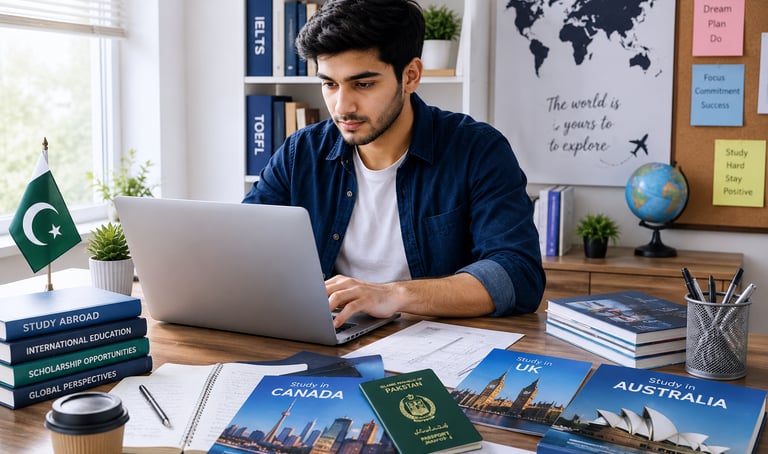
International Student Visa Guide for Pakistani Applicants (2026)
Introduction
Studying abroad is one of the biggest dreams for many Pakistani students. Every year, thousands of students leave Pakistan to pursue higher education in countries such as Canada, Australia, the United Kingdom, Germany, Malaysia, Turkey, South Korea, Italy, and many others. An international degree can open doors to better career opportunities, global exposure, and personal growth.
However, before you can start your studies overseas, obtaining a student visa is one of the most important steps. Many Pakistani applicants focus only on receiving an admission letter and forget that the visa application requires careful preparation. A missing document, weak financial evidence, or an unclear study plan can result in unnecessary delays or even visa refusal.
As a visa consultant, I have seen many first-time applicants make avoidable mistakes simply because they relied on incomplete information. This guide explains the complete international student visa process in simple English, making it easier for Pakistani students to understand what is required before submitting an application.
Although each country has its own immigration rules, most student visa applications follow a similar process. This guide covers the general requirements and practical advice that apply to many popular study destinations in 2026. Before applying, always check the official immigration website or embassy of your chosen country for the latest requirements.
https://visaguidepk.net/south-korea-visa-guide-for-pakistani-applicants-2026
Who Should Apply for an International Student Visa?
An international student visa is designed for Pakistani citizens who intend to study full-time at a recognized educational institution outside Pakistan.
You should apply if you are planning to:
Enroll in a bachelor's degree program
Study for a master's degree
Pursue a PhD or research program
Join a diploma or vocational course
Attend a language school that qualifies for a student visa
Participate in an exchange student program
Complete a professional certification course approved for international students
A student visa is generally not suitable for tourists or people planning to work abroad without studying.
https://visaguidepk.net/south-korea-visa-guide-for-pakistani-applicants-2026
Why Study Abroad?
Studying in another country offers more than just a degree. Students gain valuable international experience and develop skills that employers appreciate worldwide.
Some of the major benefits include:
Internationally recognized qualifications
Better career opportunities
Exposure to different cultures
Improved English or foreign language skills
Access to advanced research facilities
Networking with students from around the world
Potential post-study work opportunities in some countries
Many countries also allow eligible graduates to remain temporarily after graduation to gain work experience.
Types of International Student Visas
The exact visa categories differ from one country to another, but they generally fall into the following types.
Degree Student Visa
Issued to students enrolled in universities or colleges for undergraduate, postgraduate, or doctoral programs.
Typical duration:
One to four years depending on the course.
Language Course Visa
Some countries issue separate visas for students attending approved language schools.
These visas may have restrictions on working while studying.
Vocational or Technical Student Visa
Designed for students joining technical institutes or vocational training programs.
Examples include:
1. Hospitality
2. Culinary arts
3. Automotive technology
4. Information technology
5. Healthcare training
Exchange Student Visa
Issued to students participating in official exchange programs between educational institutions.
These visas are usually valid only for the duration of the exchange.
Short-Term Study Visa
Some countries offer short-term study visas for certificate programs lasting a few weeks or months.
These visas usually cannot be extended.
https://visaguidepk.net/south-korea-visa-guide-for-pakistani-applicants-2026
General Eligibility Requirements
While requirements vary by country, most Pakistani applicants must satisfy the following conditions.
Admission Offer
You must receive an official admission letter from a recognized educational institution.
Without an admission offer, most countries will not process a student visa.
Genuine Student Intention
Visa officers must believe that your main purpose is education.
Your study plans should be logical and consistent with your educational background.
Valid Passport
Your passport should normally remain valid throughout your intended stay.
Many countries also require blank pages for visa stamps.
Financial Capability
Applicants must prove they can afford:
1. Tuition fees
2. Accommodation
3. Daily living expenses
4. Travel costs
The financial proof should be genuine and supported by proper documentation.
Good Character
Some countries ask for:
1. Police clearance certificate
2. Character certificate
3. Criminal record check
This depends on the destination country.
Medical Requirements
You may need:
1. Medical examination
2. Chest X-ray
3. Vaccination records
4. Health declaration
These requirements depend on your study destination.
Required Documents
Preparing your documents carefully can significantly improve your chances of visa approval. While every country has its own specific requirements, Pakistani students are generally asked to submit the following documents:
1. Valid Passport
A passport with sufficient validity for your intended period of study.
2. Student Visa Application Form
A completed and signed visa application form.
3. Passport-Size Photographs
Recent photographs that meet the destination country's visa photo requirements.
4. University Admission Letter
An official offer or confirmation of enrollment from a recognized educational institution.
5. Tuition Fee Receipt (if applicable)
Proof that you have paid part or all of your tuition fees.
6. Academic Certificates
Copies of your Matric, Intermediate, Bachelor's, Master's, or other relevant educational certificates.
7. Academic Transcripts
Official transcripts showing your academic performance.
8. English Language Test Result
IELTS, PTE, TOEFL, or another accepted language proficiency certificate, if required by the university or immigration authority.
9. Statement of Purpose (SOP)
A well-written statement explaining your academic background, reasons for choosing the course and country, and your future career goals.
10. CV or Resume (if required)
A summary of your academic achievements, work experience, and relevant skills.
11. Financial Documents
Evidence showing that you have sufficient funds to cover tuition fees and living expenses.
12. Recent Bank Statements
Personal or sponsor bank statements demonstrating genuine financial capability.
13. Sponsor Documents
If your parents or another family member is sponsoring your education, include their CNIC, proof of income, employment or business documents, and financial support evidence.
14. National Identity Card (CNIC) Copy
A clear copy of your Pakistani CNIC or B-Form, where applicable.
15. Birth Certificate (if required)
Some countries may request this as additional identity verification.
16. Medical Reports (if applicable)
Health examination reports or vaccination records required by the destination country.
17. Police Clearance Certificate (if required)
A certificate confirming that you have no criminal record, where requested by the immigration authorities.
Before submitting your application, carefully review the official document checklist provided by your chosen country's embassy or immigration department. Missing or incorrect documents can delay the visa process or even result in a refusal.
https://visaguidepk.net/south-korea-visa-guide-for-pakistani-applicants-2026
Financial Sponsor Documents
If your parents or another family member will pay for your education, prepare documents such as:
1. Sponsor's CNIC copy
2. Employment letter
3. Salary slips
4. Income tax documents
5. Bank statements
6. Affidavit of financial support (if required)
Visa officers carefully review whether the sponsor has enough genuine income to support your education.
Step-by-Step International Student Visa Application Process
Although procedures differ slightly across countries, the overall process is usually similar.
Step 1: Choose the Right Course
Select a course that matches your previous education and future career goals.
Changing to an unrelated field without a convincing explanation may raise questions during visa assessment.
Step 2: Apply to a Recognized Institution
Submit your admission application to an accredited university or educational institution.
After acceptance, you will receive an official admission letter or Confirmation of Enrollment.
Step 3: Arrange Your Finances
Estimate your total education expenses, including:
1. Tuition fees
2. Accommodation
3. Food
4. Health insurance
5. Local transportation
6. Books and study materials
Ensure sufficient funds are available before starting the visa process.
Step 4: Prepare All Required Documents
Gather every required document well before submitting your application.
Double-check:
Passport validity
Academic records
Financial documents
Sponsor documents
Language test results
Statement of Purpose
Incomplete applications often lead to delays.
Step 5: Complete the Visa Application
Fill out the visa application form carefully.
Always provide truthful and consistent information. Even small errors or mismatched dates can create problems during processing.
Step 6: Pay the Visa Fee
Most countries require payment of a non-refundable visa application fee before processing begins.
Keep the payment receipt safely, as it may be requested later.
https://visaguidepk.net/south-korea-visa-guide-for-pakistani-applicants-2026
Visa Fees (2026)
The cost of an international student visa varies depending on the country where you plan to study. Visa application fees are separate from tuition fees and other education-related expenses. In addition to the visa fee, you may also need to pay for biometric enrollment, medical examinations, health insurance, or visa application centre services.
Depending on your study destination, the following charges may apply:
Student Visa Fee:
The visa application fee varies from country to country and according to the type of student visa.
Biometrics Fee:
Some countries charge a separate fee for fingerprint and photograph collection.
Medical Examination Fee:
Certain destinations require applicants to undergo a medical examination conducted by an approved clinic.
Visa Application Centre (VAC) Service Charges:
If you submit your application through a visa application centre, additional service fees may apply.
Courier or Passport Return Fee:
Some visa centres charge for returning your passport via courier after processing.
Health Insurance Fee:
Several countries require international students to purchase approved health or travel insurance before or after arrival.
Important: Visa fees, biometric charges, and other service costs are subject to change at any time without prior notice. Before submitting your application, always check the latest fee schedule on the official website of the relevant embassy, immigration authority, or visa application centre.
Student Visa Processing Time
Processing times differ from one country to another and can also change throughout the year. Applications submitted during peak admission seasons often take longer due to the high number of students applying.
Several factors influence processing time:
1. The destination country
2. Time of year
3. Accuracy of your application
4. Background verification
5. Completion of biometric requirements
6. Medical examination results (if required)
7. Additional document requests
Most embassies recommend applying several months before your course begins to avoid last-minute complications.
Tips to Avoid Delays
1. Apply immediately after receiving your admission letter.
2. Submit complete and accurate documents.
3. Respond quickly if additional documents are requested.
4. Check your email regularly for updates.
5. Avoid booking non-refundable flights until your visa is approved.
Financial Proof and Bank Statement Guidance
Financial documentation is one of the most closely examined parts of any student visa application. Visa officers want to confirm that you can support yourself throughout your studies without relying on unauthorized employment.
Why Financial Proof Matters
Your financial documents demonstrate that you have enough funds to cover:
1. Tuition fees
2. Accommodation
3. Food and daily expenses
4. Local transportation
5. Study materials
6. Emergency expenses
Applicants who cannot clearly prove their financial capacity are more likely to face delays or refusal.
Acceptable Financial Documents
Depending on the destination country, you may be asked to provide:
1. Recent bank statements
2. Bank balance certificates
3. Tuition fee payment receipts
4. Scholarship award letters
5. Education loan approval letters
6. Fixed deposit certificates (where accepted)
7. Sponsor's salary slips
8. Income tax returns
9. Employment letter of the sponsor
10. Business ownership documents (if self-employed)
Bank Statement Tips for Pakistani Applicants
Many Pakistani applicants underestimate the importance of maintaining a genuine banking history.
Consider the following best practices:
1. Maintain a stable account balance over several months.
2. Avoid depositing a large amount of money shortly before applying unless you can explain its source.
3. Keep financial transactions consistent with your declared income.
4. Ensure your sponsor's income supports the available funds.
5. Submit original bank documents whenever possible.
If your parents or another relative are sponsoring your education, their financial documents should clearly demonstrate their ability to cover your expenses.
https://visaguidepk.net/south-korea-visa-guide-for-pakistani-applicants-2026
Can a Relative Sponsor My Education?
Yes. In many countries, parents are the most common sponsors. However, other close family members may also sponsor your studies if permitted by the destination country's immigration rules.
Additional evidence may include:
Proof of relationship
Sponsor declaration
Financial support affidavit
Income evidence
Identity documents
Travel Insurance Requirements
Travel or health insurance requirements depend on the country where you intend to study.
Some countries require international students to purchase approved health insurance before arriving, while others allow students to enroll after reaching the country.
Insurance may cover:
1. Medical treatment
2. Hospitalization
3. Emergency care
4. Accidental injuries
5. Repatriation in certain situations
Always check the insurance requirements published by your university and immigration authority before traveling.
Biometrics Process
Many countries require student visa applicants to provide biometric information.
Biometrics generally include:
1.Fingerprints
2.Digital photograph
3.Electronic identity verification
After submitting your application, you may receive instructions to visit a designated Visa Application Centre.
During Your Appointment
Bring:
1.Original passport
2.Appointment confirmation
3.Visa application documents
4.Payment receipt (if applicable)
The biometric process is usually straightforward and takes only a short time.
Student Visa Interview
Not every country interviews student visa applicants, but if an interview is required, it plays an important role in the decision-making process.
The visa officer wants to understand whether you are a genuine student with realistic study plans.
Questions You May Be Asked
Q1: Why did you choose this country?
Q2: Why did you select this university?
Q3: Why this course?
Q4: Who is paying for your education?
Q5: What does your sponsor do?
Q6: What are your career plans after graduation?
Q7: Have you traveled abroad before?
Q8: Where will you live while studying?
Answer honestly and confidently. Avoid memorized responses, as experienced visa officers can usually recognize rehearsed answers.
Common Reasons for Student Visa Refusal
Even academically strong applicants may receive a refusal if they fail to meet visa requirements.
Some of the most common reasons include:
Insufficient Financial Evidence
Weak financial documentation remains one of the leading causes of refusal.
Examples include:
Unexplained large deposits
Low account balance
Unclear source of funds
Sponsor with insufficient income
Weak Study Plan
If your chosen course has no connection with your previous education or future career, the visa officer may question your intentions.
Your Statement of Purpose should explain:
Why you selected the course
How it supports your future goals
Why you chose the particular institution
Incomplete Documents
Missing certificates, unsigned forms, expired passports, or missing translations can delay processing or result in refusal.
Always review your application several times before submission.
False or Misleading Information
Providing incorrect information or fake documents can lead to immediate refusal and may affect future visa applications.
Always submit genuine documents.
Poor Interview Performance
Applicants sometimes fail because they:
Give inconsistent answers
Cannot explain their study plans
Lack knowledge about their university
Cannot explain their finances
Preparation is important.
Practical Tips to Improve Approval Chances
Although no consultant can guarantee visa approval, these practical steps can strengthen your application.
Choose the Right Course
Select a program that matches your previous education and long-term career plans.
Apply Early
Early applications reduce stress and provide enough time if additional documents are requested.
Write a Strong Statement of Purpose
A good SOP should explain:
Academic background
Career objectives
Reasons for selecting the country
Reasons for selecting the institution
Future plans after completing your studies
Avoid copying SOP templates from the internet.
Maintain Genuine Financial Records
Stable financial documents create confidence during visa assessment.
Keep all financial evidence transparent and verifiable.
Organize Your Documents
Arrange documents in a logical order using labeled folders.
Well-organized applications create a positive impression.
Practice for the Interview
Prepare natural answers instead of memorizing scripts.
Be ready to explain:
Your study plans
Financial arrangements
Future career goals
Common Mistakes Pakistani Applicants Make
Every year, many applications are delayed or refused because of avoidable mistakes.
Common errors include:
1. Applying too late
2. Choosing an unrelated course
3. Submitting fake or altered documents
4. Using borrowed money without proof
5. Providing inconsistent information
6. Ignoring document translation requirements
7. Writing a copied Statement of Purpose
8. Failing to explain education gaps
9. Not checking passport validity
10. Missing biometric appointments
Careful preparation significantly reduces these risks.
Latest 2026 Updates
Student visa policies continue to evolve as countries update immigration rules and education regulations.
During 2026, applicants should pay close attention to possible changes regarding:
Financial proof requirements
Visa processing procedures
Digital application systems
Biometric requirements
Health insurance policies
Medical examination requirements
Post-study work opportunities
Immigration regulations affecting international students
Important: Immigration rules can change at any time. Before submitting your application, always verify the latest information through the official immigration department, embassy, or your chosen educational institution.
Frequently Asked Questions (FAQs)
1. Can Pakistani students apply for an international student visa without IELTS?
Yes, in some cases. Certain universities and countries accept alternative English proficiency tests or provide exemptions if you have previously studied in English. However, many institutions still require IELTS, TOEFL, PTE, or another approved language test. Always check the admission requirements of your chosen university.
2. Can my parents sponsor my education abroad?
Yes. Parents are the most common financial sponsors for Pakistani students. They must provide evidence of their income, employment or business, and bank statements showing they can support your education and living expenses.
3. How much bank balance is required?
There is no single amount that applies to every country. The required funds depend on:
Tuition fees
Cost of living
Course duration
Immigration rules of the destination country
Always check the latest financial requirements published by the relevant immigration authority.
4. Can I work while studying abroad?
Many countries allow international students to work part-time during their studies, but the number of permitted working hours varies. Some destinations also allow full-time work during scheduled holidays. Always follow the conditions stated on your student visa.
5. What happens if my visa application is refused?
A refusal does not always mean you cannot apply again. Read the refusal letter carefully, identify the reasons, correct the issues, and submit a stronger application if you remain eligible.
6. Is travel insurance compulsory?
Not for every country. Some governments require international students to purchase approved health insurance before arrival, while others allow students to arrange coverage after reaching their destination.
7. Can I include my spouse or children in my application?
Some countries permit eligible international students to bring dependents, while others have stricter rules. Eligibility depends on the destination country's immigration policies and your study program.
8. Should I book my flight before receiving my visa?
It is generally safer to wait until your visa has been approved before purchasing non-refundable airline tickets, unless your university or immigration authority specifically advises otherwise.
9. How early should I apply for a student visa?
It is advisable to begin the process as soon as you receive your admission offer. Applying several months before your course starts gives you enough time to complete document verification, biometrics, medical examinations, and any additional requirements.
10. Is hiring a visa consultant mandatory?
No. Many students successfully apply on their own. However, professional guidance can be helpful if your case involves education gaps, previous visa refusals, sponsorship concerns, or complex documentation.
Final Thoughts
Studying abroad is a significant investment in your education and future career. While the visa process may seem challenging at first, careful planning and honest documentation can make it much smoother.
The key to a successful application is preparation. Choose a course that aligns with your academic background and career goals, organize your documents carefully, maintain transparent financial records, and submit accurate information throughout the process. If an interview is required, answer confidently and truthfully.
Remember that visa officers assess whether you are a genuine student who meets the immigration requirements of the destination country. A well-prepared application not only improves your chances of approval but also helps avoid unnecessary delays.
Finally, immigration policies and student visa requirements can change throughout the year. Before submitting your application, always verify the latest rules through the official immigration website, embassy, or your chosen educational institution.
We wish every Pakistani student success in achieving their dream of studying abroad.
Focus Keywords
International Student Visa Guide
Student Visa for Pakistanis
Study Abroad Visa Pakistan
International Student Visa 2026
Student Visa Requirements Pakistan
Study Visa Documents Pakistan
Student Visa Application Guide
Bank Statement for Student Visa
Student Visa Interview Tips
Study Abroad Guide Pakistan